Ground level, burrowing, and harder to seal out
Norway Rat Removal in Orlando, FL
Norway rats work at ground level instead of the roofline. They burrow along foundations, get into crawl spaces and garages, and they are most common on Orlando properties near water, drainage or open land.
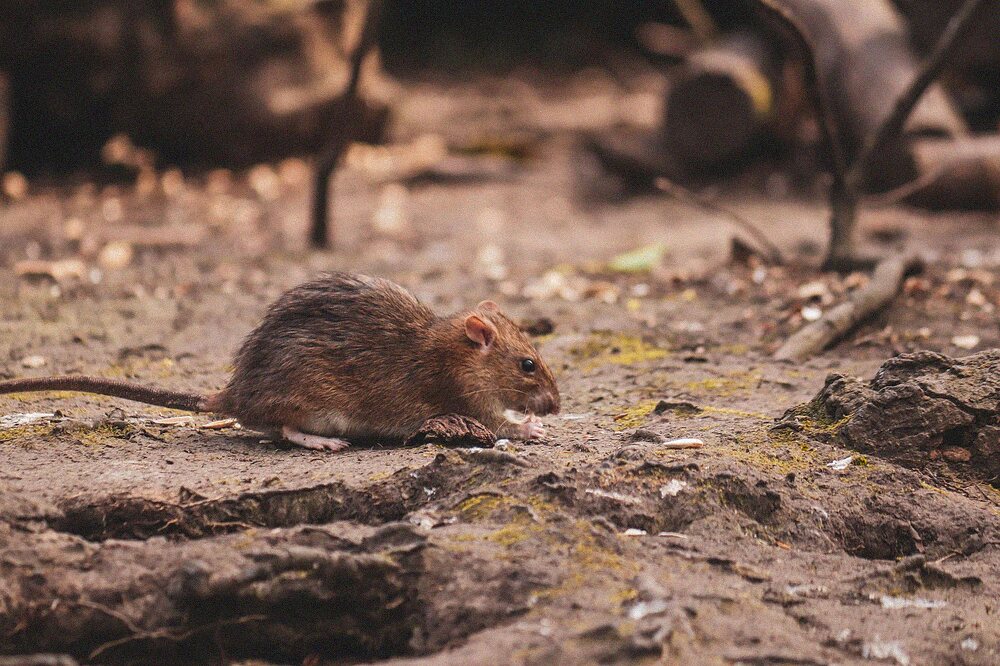
The Norway rat is the heavier, blunter cousin of the roof rat. It is also called the brown rat or the sewer rat, and it behaves in almost exactly the opposite way to the species that dominates Central Florida attics. Where a roof rat climbs, a Norway rat digs. Where a roof rat nests high in insulation, a Norway rat nests in a burrow along a foundation, under a slab, beneath a shed, or in the void under a deck.
Norway rats are less common than roof rats in this metro, which is why so many local pages treat all rats as one problem. When they are present they are harder to exclude, because a burrowing animal that can gnaw is capable of working at the weakest point of your foundation line for as long as it takes. Sealing an attic soffit is finished work. Sealing against a burrowing rat means dealing with the ground.
The properties where we find them follow a pattern. Homes backing onto retention ponds, canals and drainage easements, properties near active construction where ground has been disturbed, older neighborhoods with aging sewer laterals, and anywhere with an accessible food source at ground level such as a chicken run, pet food kept in a garage, or fruit dropping from a tree and left to rot.
Estimate What Your Job Will Cost
Six questions, using the same ranges published further down this page. It gives you a band to budget against before anyone visits.
How to recognize a Norway rat problem
The clearest sign is the burrow itself. Norway rat burrows are two to four inches across, usually found against a foundation wall, under a slab edge, beneath a shed or deck, or in dense ground cover. An active burrow has a smooth, worn entrance and often a fan of loose soil outside it. Homeowners frequently mistake them for animal holes of some other kind, and it is worth looking properly before assuming.
Indoors, the noise is at floor level rather than overhead, which is the fastest way to distinguish the species without seeing the animal. Sounds from a crawl space, from beneath the floor, from a garage, or from the base of a wall point down rather than up. The movement also sounds heavier than a roof rat, and homeowners often describe dragging or rolling rather than light scurrying.
The droppings are larger than a roof rat leaves, up to three quarters of an inch, with blunt rather than pointed ends. Gnaw damage at the bottom corners of garage doors, at the base of exterior doors, and around utility penetrations low on the wall is characteristic.
How Norway rats get in at ground level
The routes are entirely different from a roof rat and they are why a company that only knows attic work will struggle. The most common are gaps at the bottom corners of a garage door where the seal has worn, uncapped or damaged foundation and crawl space vents, the gap around a utility penetration where a pipe or conduit enters below grade, and damaged sewer laterals, which is a genuinely underrated route in older Orlando neighborhoods.
Crawl spaces under older Central Florida homes are a particular weak point. Many were screened decades ago with material that has since rusted or torn, and the space under the floor then becomes a sheltered, undisturbed nesting area with easy access to the underside of the structure. Discussions among homeowners dealing with burrowing rats in crawl spaces repeatedly warn against half measures like shallow trenching, and the approaches that hold up are proper perimeter screening carried below grade or a poured barrier.
Because the animal digs, exclusion here has to account for what is underground. Screening that stops at the soil line is an invitation to go underneath it. Effective work carries hardware cloth down and outward in an L shape below grade, which is more labor than an attic seal and is priced accordingly.
Why the treatment approach is different
With a roof rat, closing the roofline is decisive because there is a finite set of openings and the animal cannot make a new one easily in a properly sealed structure. With a Norway rat you are also managing the ground around the building and the conditions that make it attractive, so the work extends past the structure itself.
That means burrow treatment and collapse, removing harborage such as dense ground cover against the foundation, woodpiles and unused materials stored on soil, and dealing with the food source that is sustaining the population. A property that keeps chickens, feeds pets outside, or has fruit dropping and rotting beneath a tree will keep drawing rats regardless of how well the structure is sealed, and any company that does not raise this with you is not going to solve your problem.
It also means the timeline is often longer. Trapping a burrowing population is slower than trapping an attic population, because the animals have somewhere to retreat to that you cannot reach and they are more cautious about new objects on established runs.
How a Norway Rat Job Is Done
Similar sequence to attic work, with the ground line doing the work the roofline does on a roof rat job.
- 1
Ground level inspection
The technician walks the foundation line, checks crawl space and foundation vents, garage door seals, utility penetrations, and looks for active burrows and runs in ground cover.
- 2
Identify the food source
Rat populations are held in place by something. Pet food, chicken feed, fallen fruit, an unsecured bin or a compost pile all get identified, because removing the reason is part of the fix.
- 3
Trapping and burrow treatment
Traps on established runs and at burrow entrances, monitored and reset. Burrows are treated and collapsed once activity stops.
- 4
Exclusion at ground level
Hardware cloth carried below grade where burrowing is happening, vent screens replaced, garage door seals corrected, and utility penetrations sealed.
- 5
Cleanup and follow-up
Contaminated material removed and the area sanitized, with follow-up checks on properties with ongoing outside pressure.
What This Costs in Orlando
Norway rat work tends to sit at the upper end of the trapping range because the populations are more established and the exclusion is more labor intensive. Below grade screening is genuinely more work than an attic seal, and any quote that prices them the same is worth questioning.
| Service | Typical range | What moves the number |
|---|---|---|
| Inspection | Free with service | Standalone reports run 0 to 175 dollars |
| Trapping and burrow treatment | $300 to $1,200 | Population size, number of burrows, how established the colony is |
| Ground level exclusion | $600 to $2,500 | Below grade screening is more labor than attic sealing |
| Crawl space clean-out | $800 to $3,300 | Access height, contamination level, vapor barrier condition |
| Garage and vent sealing | $200 to $900 | Number of openings and whether door seals need replacing |
These are typical ranges for the greater Orlando metro. Every property is different, and the free inspection produces the actual figure with each part of the job priced as its own line item.
Why Homeowners Choose Us for This Work
We treat the ground as well as the building
A burrowing rat problem that is handled as a structure problem comes back. Every Norway rat job covers the foundation line, the harborage around it, and an honest conversation about the food source holding the population in place.
Below grade exclusion done properly
Hardware cloth carried down and outward below the soil line is the approach that holds against a digging animal. Shallow trenching and screening that stops at grade are the shortcuts that fail, and homeowners in public forums warn each other about exactly these.
Experienced, state-registered technicians
The technicians who come to your property are registered with the State of Florida, carry their own insurance, and represent more than 30 years of combined pest control experience. Someone answers this line 24 hours a day.
What Reddit Says About Norway Rat Removal in Orlando
Burrowing rat threads in public home improvement and pest control forums have a distinct character compared to attic rat threads. The recurring theme is homeowners being quoted very different approaches for the same crawl space problem and having no way to judge between them. In one thread a pest control operator advised against trenching and L screening as commonly quoted for burrowing rodents and pushed toward more substantial solutions, while another homeowner in the same discussion reported being quoted for an 18 inch screen carried below the foundation. The spread in advice is real, and it is why an itemized scope matters more here than almost anywhere else in this trade.
Cost shock is the other constant. Crawl space work produces some of the widest quote variation in the whole trade, and threads regularly feature homeowners comparing a five figure quote against someone else who had comparable work done for a third of the price. The consistent advice is to get multiple bids for identical scope, to ask exactly what is included in a clean-out, and to look closely at whether an expensive quote is bundling encapsulation or other work you may not need for a rodent problem.
The questions people tell each other to ask apply directly here. Is the exclusion carried below grade or does it stop at the soil line. Is the burrow treatment included or extra. Does the price cover the clean-out or only the trapping. How many follow-up visits are included. We answer those at the inspection, and any quote you are comparing ours against should answer them too.
What a Typical Job Looks Like
A typical project on a property backing onto a retention pond
The situation. A single story home on the edge of a subdivision, with a drainage easement and a retention pond behind the back fence. The homeowner reports noise under the floor rather than overhead, a chewed corner on the garage door, and what turns out to be three active burrows in the ground cover along the rear foundation.
What gets done. Traps go on the established runs between the burrows and the garage. The garage door seal is replaced, two foundation vents are rescreened, and hardware cloth is carried below grade along the rear elevation where the burrowing is concentrated. The homeowner moves the pet food out of the garage and clears a woodpile that had been sitting against the wall.
How it turns out. The population inside the structure is removed and the ground line is closed. The pond behind the fence is permanent, so outside pressure continues, which is why this property is a good candidate for periodic monitoring rather than a single visit and a handshake.
Common Questions
How do I know if I have Norway rats or roof rats?
Listen to where the sound is. Overhead in the attic or ceiling points to roof rats. Below you, in a crawl space, garage or the base of a wall, points to Norway rats. Norway rats also leave larger droppings with blunt ends, and they dig visible burrows two to four inches wide along foundations.
Are Norway rats common in Orlando?
Less common than roof rats, which dominate attic calls across Central Florida. Norway rats concentrate on properties near water, drainage easements, active construction and older sewer infrastructure. When they are present they usually need more work rather than less.
Can burrows just be filled in?
Filling a burrow without removing the animals moves the problem a few feet to one side. Burrows get treated and collapsed after the trapping has stopped producing, and the exclusion work is what stops new ones being dug against the structure.
Do I need my crawl space cleaned out?
It depends on how long the activity has been going on and what is down there. A short infestation may need nothing more than removal of nesting material. Long term activity with contaminated soil, damaged vapor barrier and disturbed insulation is a full clean-out, which is a substantially larger job.
Will keeping chickens mean this keeps happening?
Chicken feed is one of the most reliable rat attractants there is, and it does mean ongoing pressure. It does not mean you cannot keep chickens. It means the feed needs to be stored in sealed metal containers, the run needs to be built to exclude rodents, and the property benefits from periodic monitoring.
How long does the trapping take?
Longer than an attic job in most cases. Burrowing populations have somewhere to retreat that traps cannot reach, and the animals are more cautious about new objects on established runs. Two to four weeks is typical.
Related Services
Mouse Control
House mice fit through a hole the size of a dime. Finding and closing those holes.
Read more →Squirrel Removal
Daytime attic noise, chewed gable vents and the damage squirrels leave behind.
Read more →Rodent Inspection
A full roofline, attic and foundation inspection that tells you what is actually happening.
Read more →More about how we work on the about page, or get in touch to book a free inspection.
Get the Foundation Line Looked At Properly
A free inspection covers the foundation, crawl space, vents and garage line, identifies active burrows, and prices the trapping and the below grade exclusion separately.