The most common attic rodent in Central Florida
Roof Rat Removal in Orlando, FL
If you are hearing movement above the ceiling after dark in the Orlando area, a roof rat is the most likely explanation. They climb, they nest high, and they get in through openings most homeowners never think to check.
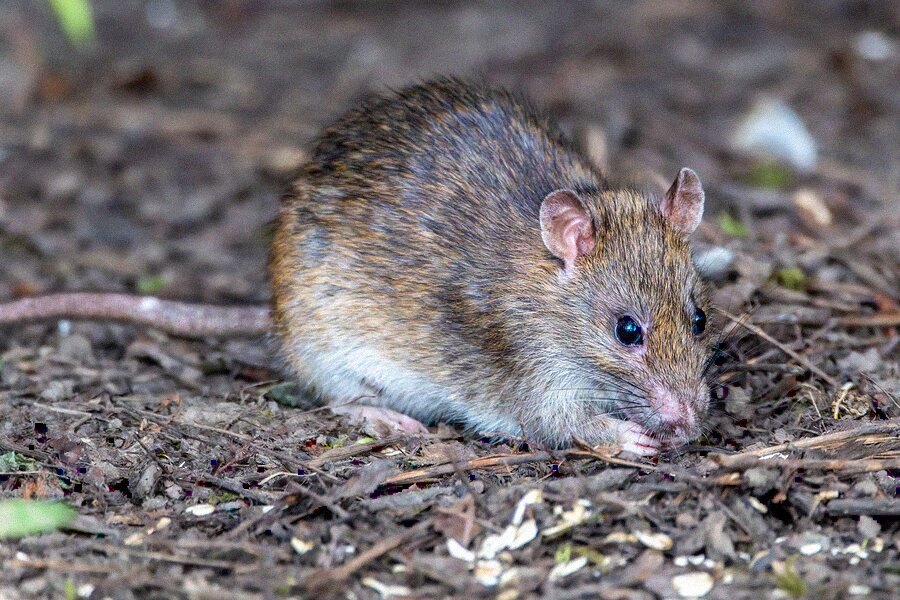
The roof rat is the worst rodent pest in the state of Florida and the most abundant, according to UF/IFAS Extension. It is also called the black rat, the fruit rat or the citrus rat, and around Central Florida you will hear people call it a tree rat, which describes its habits better than any of the official names. It is an agile climber that spends very little time on the ground, and that single fact explains why so many rodent treatments in this metro fail.
A general pest control route sets bait stations at ground level around the perimeter of a house. That is a reasonable approach for a ground dwelling species. It is close to useless against an animal that travels along an oak limb, drops onto your roof, and enters through a soffit return twelve feet above the nearest bait station. Getting rid of roof rats means working at the roofline, and it means closing the openings rather than only removing the animals using them.
Roof rats reproduce quickly enough that time genuinely matters. A female produces four to five litters a year, with five to eight young per litter after a gestation of only 21 to 23 days. A pair that moved into your attic in the spring is a considerably larger population by the autumn, and the volume of droppings and contaminated insulation grows along with it.
Estimate What Your Job Will Cost
Six questions, using the same ranges published further down this page. It gives you a band to budget against before anyone visits.
How to tell it is roof rats and not something else
Roof rats are nocturnal, so the noise starts in the evening and peaks in the small hours. Homeowners describe scurrying, scratching, and a sound like something rolling across the ceiling, which is usually an animal moving a nut or a piece of fruit. Daytime noise in an attic points to squirrels instead, and that distinction is the single most useful thing you can tell us on the phone.
The droppings are around half an inch long with pointed ends, noticeably larger than the rice grain droppings a mouse leaves. They concentrate along the runs the animals use repeatedly, which in a Florida attic usually means along the top plate of the walls and near the eaves. You will also find smudge marks where oil and dirt from their fur has rubbed onto joists and truss members along a route used night after night.
Outside, look up rather than down. Gnawed fruit still hanging on a tree is a classic roof rat sign in Central Florida, and so are droppings on top of a fence rail or an air conditioner cabinet. If there are palms or oak limbs touching the roof, assume that is the route.
Where roof rats get into Orlando homes
A roof rat needs an opening about the size of a quarter, and it can enlarge a smaller gap by gnawing. The openings we find most often on Central Florida homes are soffit returns where the soffit meets the roof plane, gaps at the fascia board, unscreened or damaged gable and roof vents, plumbing and electrical penetrations through the roof deck, and the corners of barrel tile roofs where the tile profile leaves a natural void.
Tile roofs deserve their own mention because they are so common here and so frequently misunderstood. The gap under a barrel tile at the eave is an open door into the roof structure on many homes, and closing it properly requires materials that will not damage the tile or trap moisture. This is skilled work and it is where a cheap exclusion quote usually turns out to be cutting corners.
The other route is the one that has nothing to do with your house. Overhanging oak limbs, palm fronds resting against the fascia, and vines running up an exterior wall all deliver an animal onto your roof without it touching the ground. Trimming branches back from the roofline is one of the few genuinely effective things a homeowner can do without help.
Why trapping alone does not end a roof rat problem
This is the point that generates the most argument and the most repeat business in this trade. Trapping removes the animals that are in your attic right now. It does nothing about the opening that let them in. Roof rats follow established routes and the population outside your house is effectively unlimited, so an unsealed entry point produces a new occupant within weeks or months.
The reverse mistake also causes problems. Sealing every opening while animals are still inside traps them in the structure, where they die in inaccessible places and create an odor problem that is worse and more expensive than the original job. The correct sequence is to identify every opening, close all of them except the active runs, trap the remaining animals, then close the last openings once activity has stopped.
Poison deserves a direct answer because it gets recommended constantly. It works in the sense that the animals die. It creates two problems in exchange. The animal dies inside your wall or attic and the odor lasts for weeks, and poisoned rodents are eaten by owls, hawks, cats and dogs, which is how secondary poisoning happens. For attic work, trapping combined with sealing is the standard professional approach.
What roof rats damage while they are up there
Rodent incisors grow continuously, so gnawing is constant rather than occasional. In a Florida attic the things being gnawed are wiring insulation, flexible ductwork, PEX plumbing lines, and whatever you have in storage. Damaged ductwork is the one homeowners notice on their power bill before they notice anything else, because a torn duct in a 130 degree attic means the system is cooling the attic.
The bigger cost is usually the insulation. Roof rats nest in it, compress it, and contaminate it with droppings and urine. Compressed and soiled insulation loses a large share of its R-value, so the attic stops doing its job in the middle of a Central Florida summer. That is why insulation replacement, at 2.50 to 5.50 dollars per square foot, is so often the largest line item on a long running infestation.
The CDC records that rats and mice can spread over 35 diseases. In practical terms, the attic concern is the droppings and urine in insulation and the dust that gets disturbed when anyone works up there, which is why cleanup crews wear respirators and why we do not recommend a homeowner tackle a heavily contaminated attic themselves.
How a Roof Rat Job Is Done
Five stages. The inspection defines the scope of everything that follows, and you see the scope in writing before work starts.
- 1
Full inspection
A technician walks the roofline, the attic interior, and the foundation, identifying the species, the active runs, every entry point, and the extent of contamination. This is where the quote comes from, and it costs nothing when you book the work.
- 2
Seal the inactive openings
Steel mesh, hardware cloth and flashing close every opening except the runs currently in use. Rodents cannot chew through correctly installed steel, which is what makes this permanent.
- 3
Trap the animals inside
Snap traps placed on active runs in the attic, then monitored and reset. This phase usually runs one to three weeks depending on the population.
- 4
Close the last entry points
Once activity stops, the remaining openings are sealed. Doing this last is what prevents animals dying inside the structure.
- 5
Cleanup and restoration
Droppings and nesting material removed, the space sanitized, and contaminated insulation replaced where the contamination justifies it.
What This Costs in Orlando
Independent cost data puts the Orlando average for rat extermination at around 788 dollars, with most homeowners spending between 417 and 1,180 dollars. That figure covers trapping. Exclusion, cleanup and insulation are separate scopes and are priced separately, which is exactly why quotes from different companies are so hard to compare.
| Service | Typical range | What moves the number |
|---|---|---|
| Inspection | Free with service | Standalone reports run 0 to 175 dollars |
| Trapping and removal | $250 to $1,200 | Home size, duration of activity, number of active runs |
| Full-home exclusion sealing | $500 to $2,500 | Roof complexity and number of openings |
| Attic cleanup and decontamination | $600 to $2,500 | Attic size and contamination level |
| Insulation removal and replacement | $2.50 to $5.50 per sq ft | Square footage and insulation type |
These are typical ranges for the greater Orlando metro. Every property is different, and the free inspection produces the actual figure with each part of the job priced as its own line item.
Why Homeowners Choose Us for This Work
We work at the roofline
Six of the seven common entry points on a Central Florida home sit at or above the roofline. Perimeter bait stations do not reach any of them. Every job starts with a physical inspection of the roof, soffit and attic, because that is where a roof rat problem actually lives.
The sealing scope is written down
You get the list of openings found and what will be done to each one, before work begins. That is the document that lets you compare our quote against anyone else, and it is the thing missing from most of the quotes homeowners bring us.
Experienced, state-registered technicians
The technicians who come to your property are registered with the State of Florida, carry their own insurance, and represent more than 30 years of combined pest control experience. Someone answers this line 24 hours a day.
What Reddit Says About Roof Rat Removal in Orlando
Homeowner discussion of roof rats is remarkably consistent about one thing. Across public pest control and home improvement forums, the advice people give each other again and again is that sealing is the part that matters. One commenter put the case for exclusion as bailing water without repairing the hole, and that framing shows up in thread after thread. People who paid for trapping alone report the animals returning, while people who paid for a complete seal report the problem ending. One homeowner described paying around 1,800 dollars five years earlier and never seeing rodents again, and attributed it to a previous owner having refused the complete job for years.
The red flags people warn each other about are worth knowing before you take any quote. The strongest is a company selling a poison-only plan and describing it in ways that are not true, and the specific claim that poison makes rats thirsty so they leave the house to die gets called out as a myth wherever it appears. Others include quotes that are not itemized, long monitoring contracts bundled into a removal price, and companies that return for months without changing the result. The advice given most often is to get multiple bids for identical scope and to insist the quote separates trapping, sealing and cleanup.
The questions people tell each other to ask are the ones we answer at the inspection without being asked: what exactly is included, is the sealing work covered, will you clean up or only trap, how many follow-up visits come with this, and what happens if they come back. If any quote you are holding does not answer those five, that is worth resolving before you sign it.
What a Typical Job Looks Like
A common call from a Winter Park homeowner
The situation. A 1950s ranch under heavy oak canopy, scratching overhead starting around ten each night, and a homeowner who has not slept properly in a fortnight. A general pest company had set exterior bait stations twice with no change, which is the usual outcome when the animal never comes down to ground level.
What gets done. The inspection finds two soffit returns open where the porch roof ties into the main roof, plus an oak limb resting on the fascia. The inactive openings are sealed in steel, traps go in on the attic runs, the limb is flagged for the homeowner to have cut back, and the last opening is closed once the traps stop producing after about two weeks. Droppings are removed and the insulation in the affected bay is replaced.
How it turns out. The noise stops, which is the part the homeowner actually cares about, and the attic is no longer a route into the house. The sealing work is what keeps it that way, because the oak canopy that delivered the first animals is still there and will keep delivering them to any opening left available.
Common Questions
What is the difference between a roof rat and a Norway rat?
Roof rats climb and nest high, so they show up in attics, ceilings and upper walls. Norway rats burrow and stay low, so they show up in crawl spaces, garages and around foundations. Roof rats are far more common in Central Florida. Roof rats are also slimmer with a tail longer than their body, while Norway rats are heavier with a shorter tail.
How long does roof rat removal take?
The trapping phase typically runs one to three weeks. Sealing is usually completed in one or two visits once the inspection has mapped the openings. Cleanup and insulation replacement add another visit. A straightforward job is finished inside a month.
Can I just trim my trees and be done with it?
Trimming limbs back from the roofline genuinely helps and it is one of the few effective things a homeowner can do alone. It will not resolve an active infestation, and it does not close the openings that are already there. Treat it as prevention that supports the sealing work rather than a replacement for it.
Will they come back after the job is finished?
If the openings were properly sealed in steel, the same route is closed permanently. What changes over time is the building itself, since new gaps appear as fascia weathers, tiles shift and new penetrations get cut for utilities. Properties under heavy canopy or backing onto woods carry more ongoing pressure, which is what our prevention plans are for.
Is it safe for my family and pets while the work is happening?
Trapping is done in the attic, away from living space, and traps are placed where pets cannot reach them. Because we avoid poison for attic work, there is no secondary poisoning risk to a dog or cat that finds a dead rodent.
Do I need the insulation replaced?
Only if the contamination justifies it. Light droppings in one area usually need removal and sanitizing. Months of activity with soiled and compressed insulation across the attic is a different situation, and there the replacement is about restoring R-value as much as hygiene. The inspection tells you which one you have.
Related Services
Norway Rat Removal
Ground-level and burrowing rats around foundations, crawl spaces and garages.
Read more →Mouse Control
House mice fit through a hole the size of a dime. Finding and closing those holes.
Read more →Squirrel Removal
Daytime attic noise, chewed gable vents and the damage squirrels leave behind.
Read more →More about how we work on the about page, or get in touch to book a free inspection.
Find Out What Is Actually in Your Attic
A free inspection identifies the species, maps every entry point, and prices the work as separate line items. Someone answers this line 24 hours a day.